8 min read
How Much Will a Home Addition Increase Property Taxes in Connecticut?
AUGUST 17, 2026

A home addition can solve a major space problem without forcing you to leave a neighborhood you love. But the construction budget is not the only number to consider. Adding finished living space may also increase your home’s assessed value—and therefore your annual property-tax bill.
Connecticut homeowners often ask how large that increase will be before deciding whether to build a family room, primary suite, dormer, in-law suite, or second story.
There is no single statewide dollar amount. The result depends on the value your town assessor assigns to the completed improvement and the mill rate in your municipality.
This guide explains how the calculation works, how to make a reasonable planning estimate, and what to ask your local assessor before construction begins.
THE SHORT ANSWER
Will a Home Addition Increase Your Property Taxes?
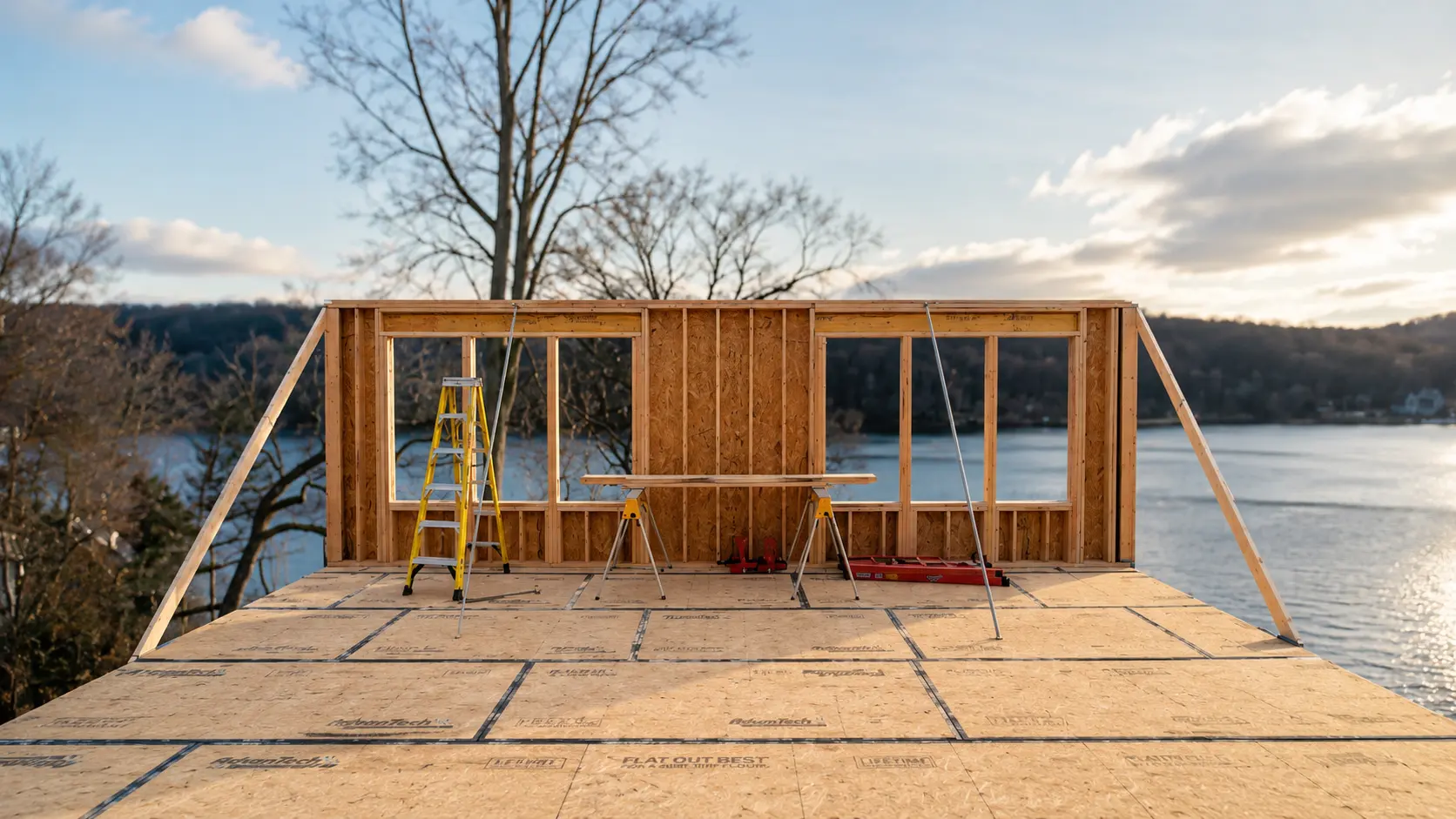
Usually, an addition that creates legal finished living space increases a property’s market value. When the town recognizes that improvement, the assessed value may rise as well.
The change is not automatic in the same amount for every project. Assessors consider the property, the type and quality of the improvement, and local market evidence. A basic unfinished structure will not necessarily be valued the same way as a finished primary suite with a bathroom, custom millwork, and upgraded mechanical systems.
The safest answer is: expect some increase, but ask your municipal assessor how new construction is reviewed and when it is added to the grand list.
If you are considering building upward, compare full second-story additions, dormers, and attic conversions.
HOW TAXES WORK
How Connecticut Calculates Property Taxes
Connecticut property taxes are administered by each municipality, so the exact impact of an addition depends on your town and the value the assessor assigns to the completed improvement.
Most Connecticut real estate is assessed at 70% of fair market value. The town then applies its mill rate to that assessed value.
Basic formula: (assessed value × mill rate) ÷ 1,000 = annual property tax.
One mill equals $1 of tax for every $1,000 of assessed value. Because mill rates vary by municipality and can change with local budgets, two similar additions in different towns may produce different tax increases. Connecticut’s Office of Policy and Management publishes current and historical mill rates.
ESTIMATING
A Simple Way to Estimate the Possible Increase
For early budgeting, you can estimate the possible annual increase using the value the improvement might add—not simply the amount you spend.
Assume, for illustration only, that an addition adds $200,000 in market value and the local real-estate mill rate is 30.
- Estimated added market value: $200,000
- Estimated assessed value at 70%: $140,000
- Estimated annual tax increase: $140,000 × 30 ÷ 1,000 = $4,200
- Estimated monthly equivalent: $350
This is not a quote or prediction. The assessor may determine a higher or lower added value, and the town’s mill rate may change.
IMPORTANT DISTINCTION
Construction Cost Is Not the Same as Added Value
A $300,000 construction project does not automatically add $300,000 to the assessor’s estimate of market value. Project cost includes labor, design, engineering, permits, site conditions, demolition, temporary protection, and finish selections. Buyers may value those improvements differently.
The reverse can also occur. A strategically designed addition may solve a major functional problem and contribute meaningful market value even when individual construction costs are not visible in the finished space.
Use construction cost to build your project budget. Use the assessor’s process and local market evidence to think about potential property taxes.
PROJECT TYPES
Which Home Improvements May Affect the Assessment Most?
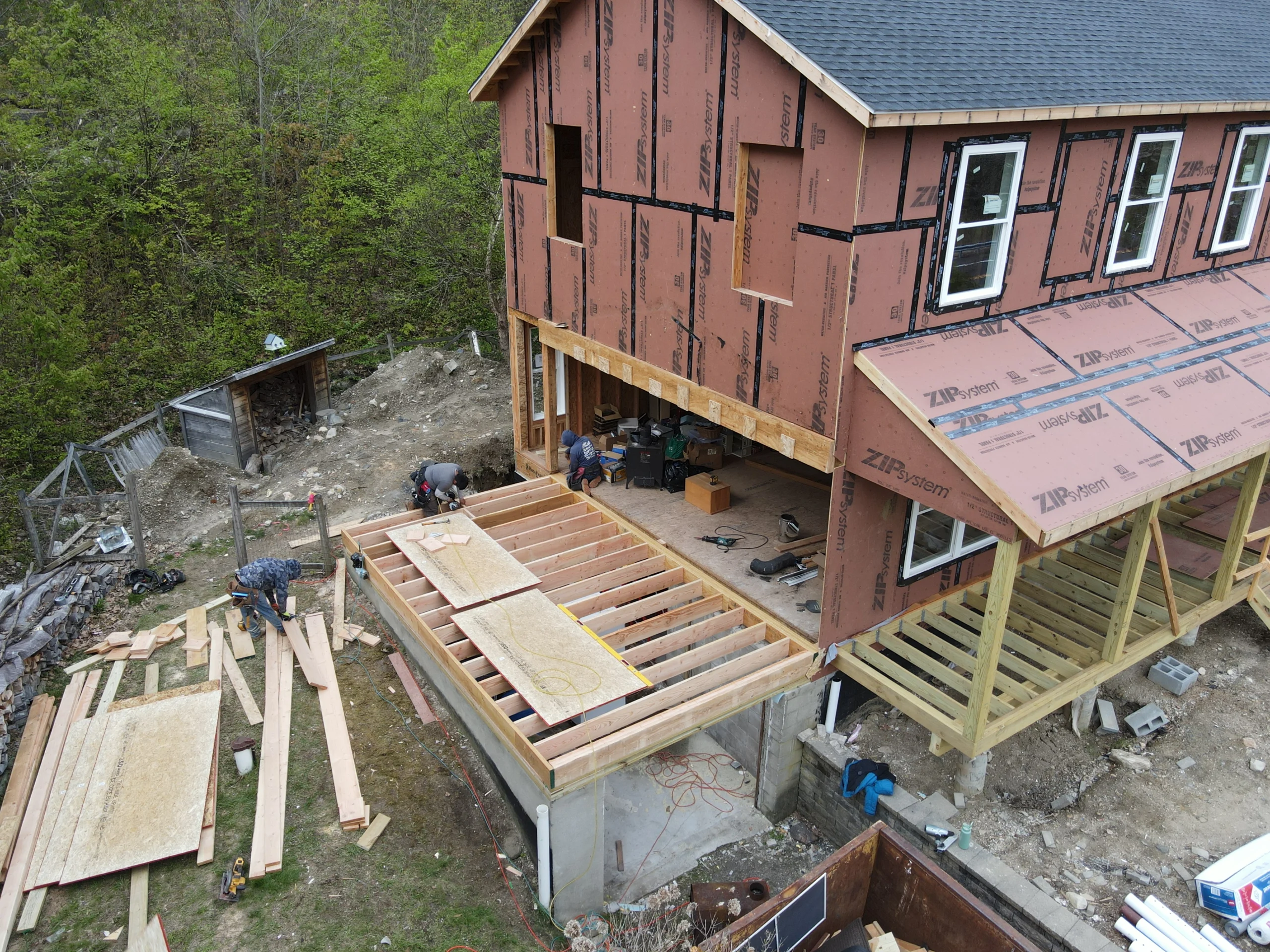
Any permitted improvement can be reviewed, but projects that add legal bedrooms, bathrooms, finished square footage, or significant new functionality are more likely to affect value. The result still depends on the property and the municipality.
Full second-story addition
A full second story can add substantial finished living area, bedrooms, bathrooms, and utility. Because the improvement is large, homeowners should expect it to receive careful assessment review.
Dormer addition
A dormer may create less new space than a full second story, but it can turn limited upper-level area into comfortable, legal living space. Added bathrooms, bedrooms, and improved headroom may all influence value.
Attic conversion
Finishing an existing attic may not expand the footprint, but it can still create recognized living area. Stair access, ceiling height, insulation, heating, egress, permits, and the final use of the space can matter.
BEFORE YOU BUILD
When Will the New Assessment Show Up?
Timing varies by municipality and by the project’s completion date. New work may appear after permits are closed, a certificate of occupancy is issued, or the assessor inspects and records the improvement.
Ask whether your town prorates new construction, when its grand list is finalized, and which fiscal-year tax bill will reflect the change. This prevents an unpleasant surprise after the project is complete.
LOCAL VARIATION
Why Your Connecticut Town Matters
Connecticut does not impose one real-estate mill rate for every homeowner. Each municipality adopts its own rate, and some properties are also subject to a district tax.
That means the same estimated assessment increase can produce different tax bills in West Hartford, Litchfield, Southbury, Fairfield, or another community. Revaluations and annual municipal budgets can also change the relationship between assessed value and the mill rate.
Use your property’s actual tax district and the correct real-estate mill rate—not a statewide average.
PREPARATION
Questions to Ask Your Town Assessor
Before relying on an estimate, contact the assessor’s office and ask:
- How does the town value newly completed home additions?
- When will the improvement be inspected?
- When will the new assessment appear on the grand list?
- Does the town prorate new construction?
- Which mill rate and tax district apply to this property?
- Can the office explain the appeal process if the recorded facts are incorrect?
The assessor may not promise a final value before construction, but the office can explain the local process and timing.
TOTAL BUDGET
Include Property Taxes in the Long-Term Cost
Property taxes should be considered alongside design fees, engineering, construction, financing, insurance, utilities, maintenance, and temporary living arrangements.
A manageable construction payment can feel very different once the homeowner also accounts for a larger tax escrow and the operating cost of additional square footage.
If you are considering building upward, our Connecticut second-story addition cost guide explains the major factors that shape the construction budget.
PLANNING MATTERS
How Design-Build Planning Helps
Good planning connects the desired space, site constraints, zoning, structure, design, and budget before construction documents are complete. Property taxes are not controlled by the design-build firm, but they belong in the same early feasibility conversation.
When homeowners understand both the one-time investment and the likely ongoing costs, they can compare options more honestly—such as a full addition, a smaller dormer, reworking existing space, or moving.
REALISTIC EXPECTATIONS
What a Contractor Can (and Cannot) Tell You
A contractor can explain the proposed scope, construction cost, permits, square footage, and features that may influence value. A contractor cannot issue a binding property-tax estimate or control the town’s assessment.
Be cautious when anyone promises a precise tax increase without the assessor’s involvement. The most responsible approach combines a realistic project plan with information directly from the municipality.
SCHEDULE A CONSULTATION
READY TO TRANSFORM YOUR HOME?
After you submit, our team will reach out within 1 business day to schedule a call and discuss your goals.
COMMON MISTAKES
Common Property-Tax Planning Mistakes
- Assuming the tax increase will equal a fixed percentage of construction cost
- Using the wrong town or district mill rate
- Forgetting that mill rates can change
- Ignoring property taxes when comparing renovation with moving
- Waiting until construction is nearly complete to call the assessor
- Treating an online calculator as a guaranteed result
ESTIMATING RESPONSIBLY
Do Not Rely on a Generic Online Estimate
Online calculators can demonstrate the formula, but they cannot determine the added market value of your specific improvement. They may also use an outdated mill rate or omit a special taxing district.
Use calculators for scenario planning only. Confirm the current rate with the town and treat the added-value assumption as a range until the assessor completes the official review.
NEXT STEP
Start With the Assessor and a Feasibility Review
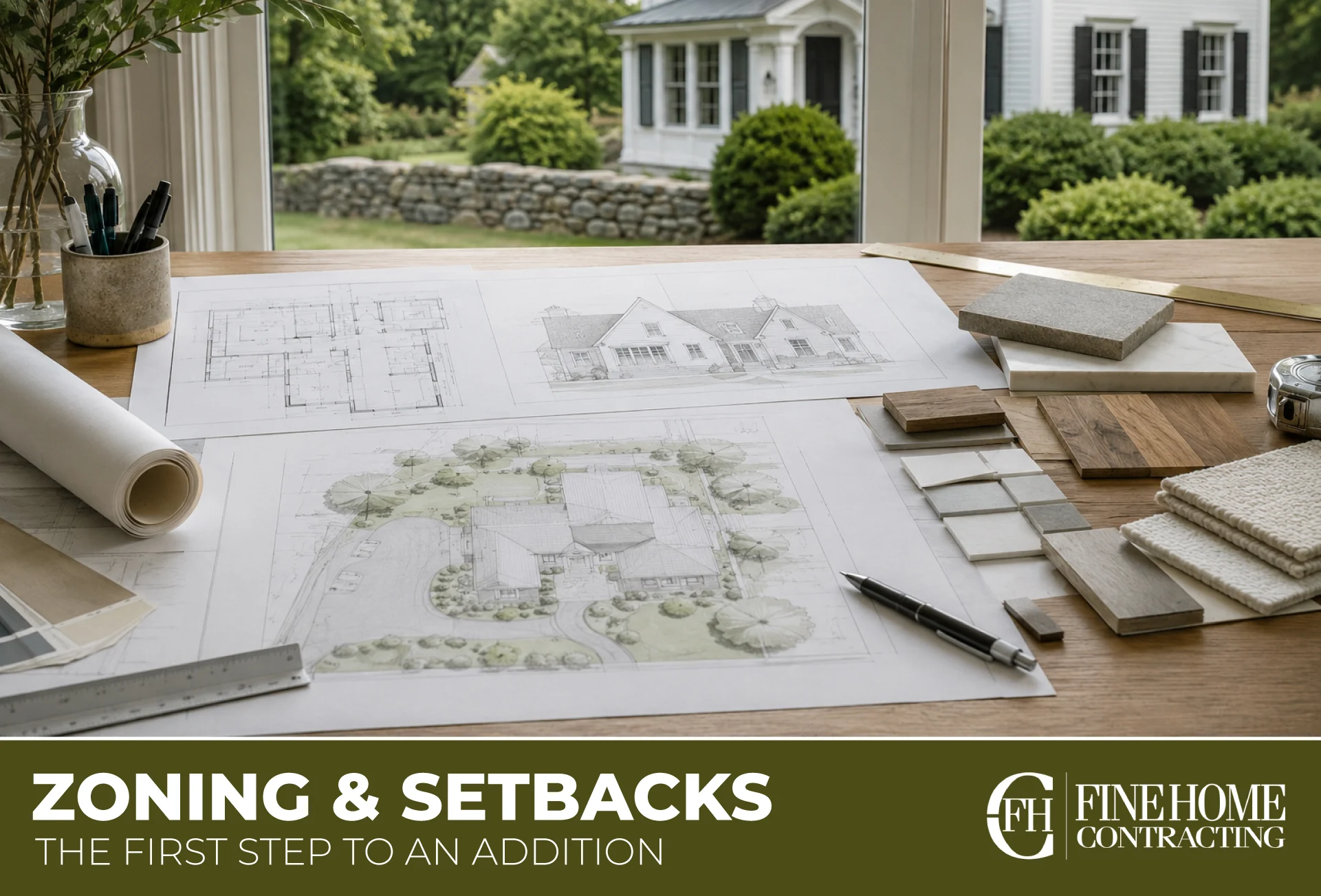
The first useful step is a short call to the municipal assessor about process and timing. The next is a feasibility review that determines what the property can legally and structurally support.
Our guide to the first step of planning a Connecticut home addition explains how zoning, setbacks, septic limitations, utilities, and existing conditions can shape the project before floor plans are finalized.
PLANNING AHEAD
Planning a Connecticut Home Addition?
A well-designed addition should improve the way your home works without creating financial surprises. Fine Home Contracting helps Connecticut homeowners evaluate complex additions through coordinated design, budgeting, engineering, permitting, selections, and construction planning.
Explore our Connecticut home addition services or schedule a consultation to discuss the space you need and the planning required to build it well.
FREQUENTLY ASKED QUESTIONS
Frequently Asked Questions
SCHEDULE A CONSULTATION
READY TO TRANSFORM YOUR HOME?
After you submit, our team will reach out within 1 business day to schedule a call and discuss your goals.
SCHEDULE A CONSULTATION
READY TO TRANSFORM YOUR HOME?
After you submit, a member of our team will reach out within 1 business day to discuss your goals.
FINE HOME CONTRACTING
Luxury Design-Build Services




About the Author: David Perrotti