9 min read
Warmup vs. Schluter DITRA-HEAT: An Honest Heated-Floor Comparison
AUGUST 26, 2026
Affiliate disclosure: Fine Home Contracting is a Warmup affiliate partner. If you request a quote or purchase through a Warmup link in this article, we may receive a commission. Our opinions and recommendations remain our own.
Radiant floor heating can feel like an optional luxury—until the first cold Connecticut morning when you step onto a warm bathroom floor.
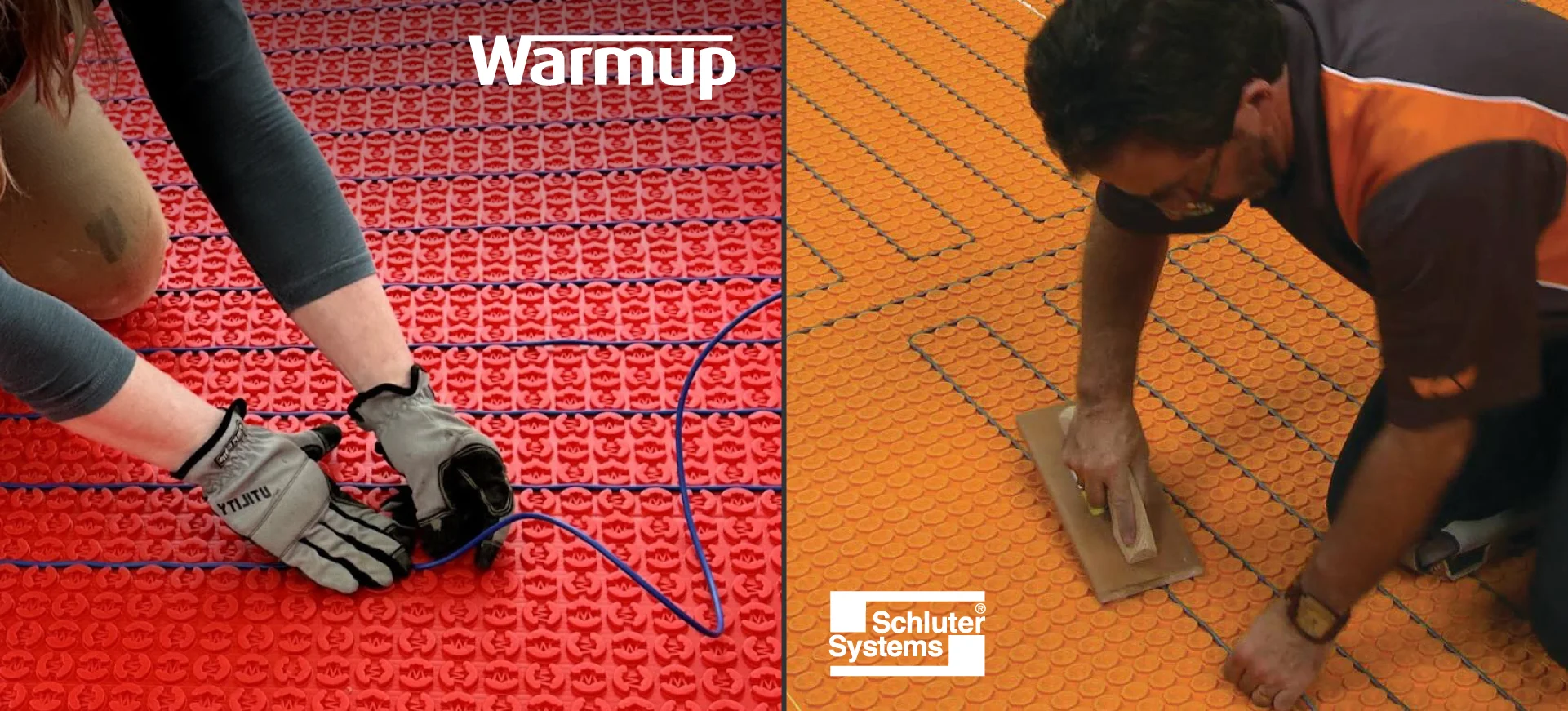
Schluter DITRA-HEAT is one of the best-known electric floor-warming systems in the remodeling industry. It is proven, well supported, and fits naturally into projects already using Schluter tile and shower products.
Warmup, however, gives Connecticut homeowners a compelling reason to look beyond the familiar name. Its North American operation is based in Bethel, Connecticut, and the system combines competitive floor-heating performance with whole-room design support, advanced thermostat control, remote system monitoring, and a purpose-built insulation layer.
After comparing the systems, Warmup is our preferred choice for most Connecticut homeowners starting a new heated-floor project from scratch. Schluter remains a quality option, but Warmup offers the more complete package when comfort, system oversight, efficiency guidance, and accessible support all matter.
THE SHORT ANSWER
Warmup or Schluter: Which Would We Choose?
For a Connecticut remodel where we are free to specify either system, we would lean toward Warmup.
The heating cables themselves are only part of the decision. Warmup’s advantage is the complete homeowner experience around the system:
- Design support for comfort heating or potential primary heating when a heat-loss calculation supports it
- 7iE smart thermostat control and energy-use visibility
- Free Smartcare React remote diagnostics and technical support
- Optional Efficiency+ monitoring, alerts, reports, and personalized efficiency guidance
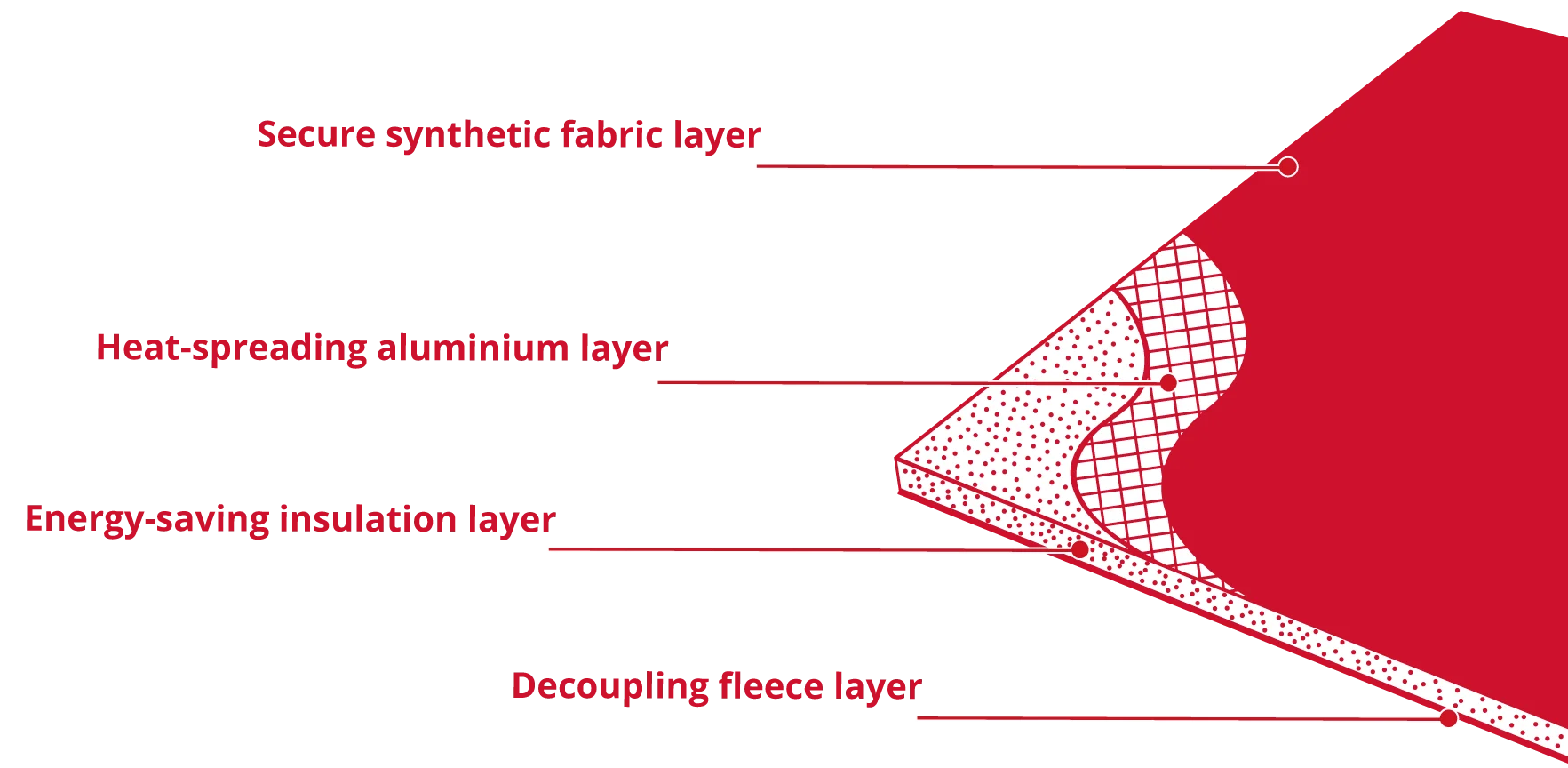
- Ultralight Insulation, which adds insulation, heat spreading, decoupling, and acoustic benefits beneath the finished floor
- A North American operation located here in Connecticut
Schluter is still an excellent fit when the installer is already building the room around the Schluter ecosystem. But if the question is which system gives a Connecticut homeowner the broader combination of heating design, controls, ongoing support, and local presence, Warmup has the edge.
SIDE-BY-SIDE COMPARISON
Warmup vs. Schluter at a Glance
| Category | Warmup | Schluter DITRA-HEAT |
|---|---|---|
| Heating role | Floor warming, comfort heating, and potential primary heat when heat-loss calculations and system design support it | Primarily positioned as floor warming and comfort heating |
| Thermal and acoustic layer | Ultralight Insulation provides insulation, heat spreading, decoupling, and acoustic performance | DITRA-HEAT-DUO combines the uncoupling membrane with a thermal break and sound control |
| Smart controls | 7iE thermostat, app control, energy data, and smart-home integration | Wi-Fi thermostat options, schedules, app control, and energy tracking |
| Remote support | Smartcare React offers free 24/7 remote diagnostics; Efficiency+ adds proactive monitoring and guidance | Established manufacturer and installer support without an equivalent homeowner monitoring subscription |
| Best fit | Homeowners who want a complete heating, control, and support package | Projects already standardized around Schluter tile assemblies |
| Connecticut connection | North American operation based in Bethel, Connecticut | Global brand with broad distribution and installer familiarity |
Important: Exact performance depends on the selected product, cable spacing, available heated area, voltage, subfloor, insulation, finished flooring, controls, and the room’s heat loss. A product name alone does not determine the final result.
HEATING PERFORMANCE
Warm Floors and More…
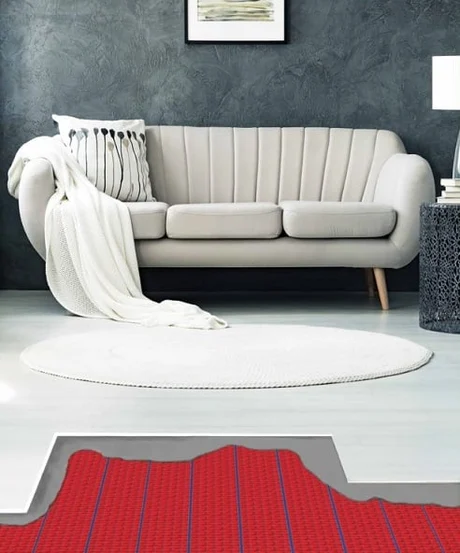
For ordinary bathroom floor warming, both brands can produce the result most homeowners want: evenly heated tile and a more comfortable room.
Warmup’s more meaningful advantage appears during planning. Warmup specifically supports designing electric underfloor heating as a primary heat source when a room-by-room heat-loss calculation shows that the available heated floor area and wattage can meet the demand. That can be a realistic option in newer, well-insulated homes, additions, and high-performance renovations.
It is not an automatic promise for every house. An older Connecticut home with significant air leakage, limited floor coverage, or weak insulation may still need another heat source. The honest answer comes from the heat-loss calculation, not from the logo on the thermostat.
Schluter’s published DITRA-HEAT materials focus mainly on floor warming and comfort heating. That does not mean its cable can never contribute meaningful room heat; it means Warmup more clearly supports primary-heating design as part of the planning process. For a homeowner hoping the floor system can do more than take the chill off tile, that distinction favors Warmup.
WHAT GOES BENEATH THE HEAT
Warmup Ultralight Insulation vs. DITRA-HEAT-DUO
The layer beneath the heating system matters, especially over a cold concrete slab or in a room where sound transmission is a concern.
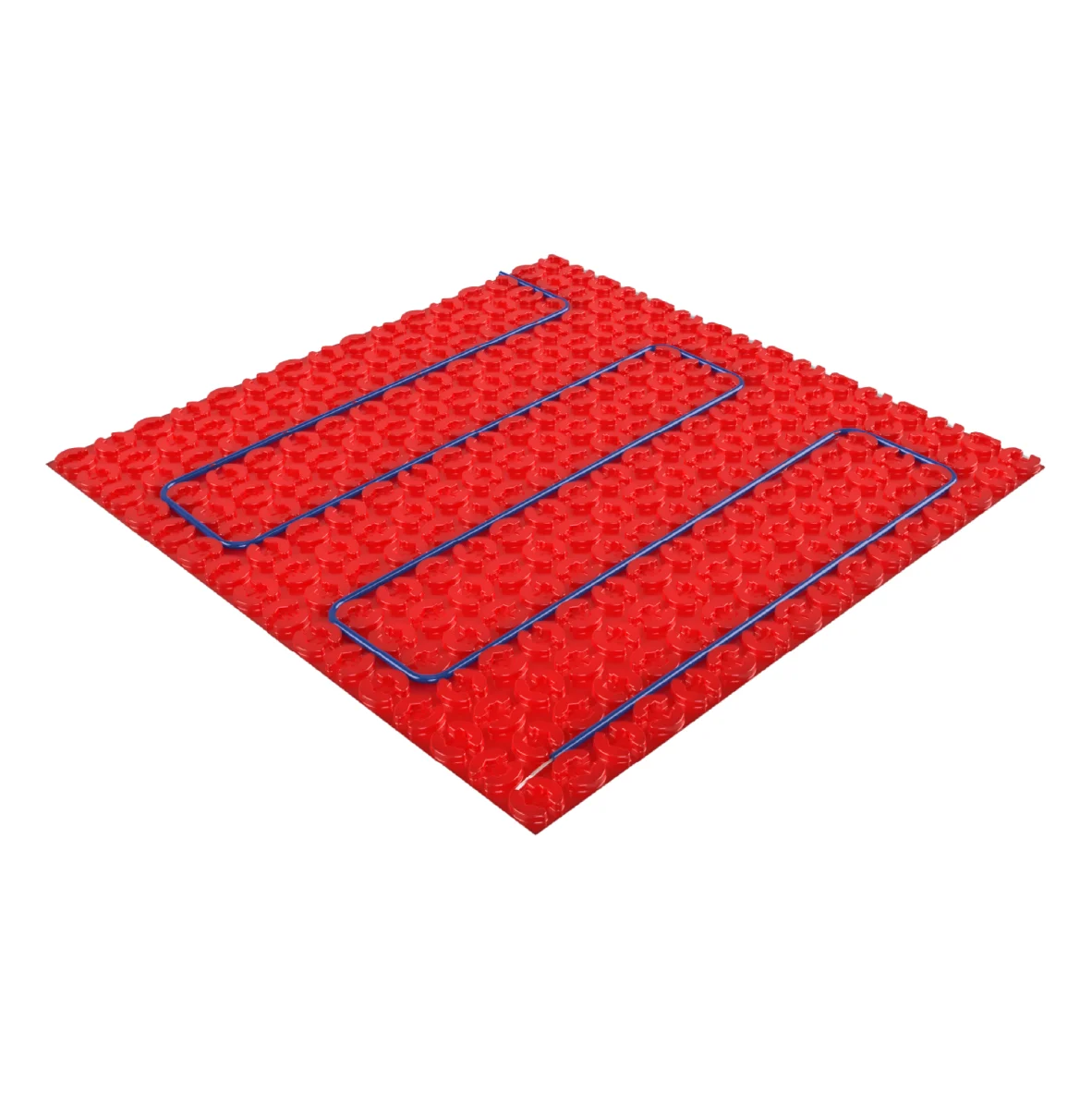
Warmup’s Ultralight Insulation is a thin, four-in-one board designed specifically for electric floor heating. It provides insulation, helps spread heat, supports decoupling beneath tile, and adds acoustic performance. Warmup’s peel-and-stick heating products can adhere directly to it, creating a straightforward system rather than treating insulation as an unrelated add-on.
Schluter’s DITRA-HEAT-DUO addresses a similar problem in a different format. It integrates a thermal break and sound-control layer into the uncoupling membrane, which can improve response over concrete and reduce impact sound.
These products are not identical, and the best assembly depends on the subfloor and finished material. But Warmup Ultralight gives the brand a credible answer to one of DITRA-HEAT-DUO’s strongest benefits while also fitting directly into Warmup’s own heating system. For Connecticut slabs, basements, additions, and second-floor bathrooms, that is a practical advantage worth specifying early.
SMARTCARE AND EFFICIENCY+
Warmup’s Biggest Advantage Is What Happens After Installation
Electric floor heating is usually buried beneath a finished floor for decades. That makes the support and information available after installation unusually important.
With a connected Warmup thermostat, Smartcare React provides free 24/7 remote diagnostics and technical support. If the system reports an issue, Warmup can review operating data remotely and help identify what is happening before a homeowner or contractor starts guessing.
The optional Efficiency+ subscription goes further. It adds proactive system monitoring, alerts, health checks, usage reports, and personalized recommendations intended to help the homeowner operate the floor more efficiently. Warmup currently lists Efficiency+ at $3.99 per month in the United States.
No subscription can guarantee a particular savings percentage in every home. Weather, electric rates, floor construction, insulation, schedules, and temperature settings all affect consumption. The real value is visibility: homeowners can see how the system is behaving and receive useful guidance instead of treating the thermostat as a black box.
That ongoing relationship is where Warmup separates itself most clearly. Schluter provides capable controls and strong product support, but Warmup’s combination of remote diagnostics and optional efficiency coaching feels more complete for a homeowner who plans to live with the system long term.
CONTROLS AND INSTALLATION
A Better Homeowner Experience Still Depends on a Good Installation
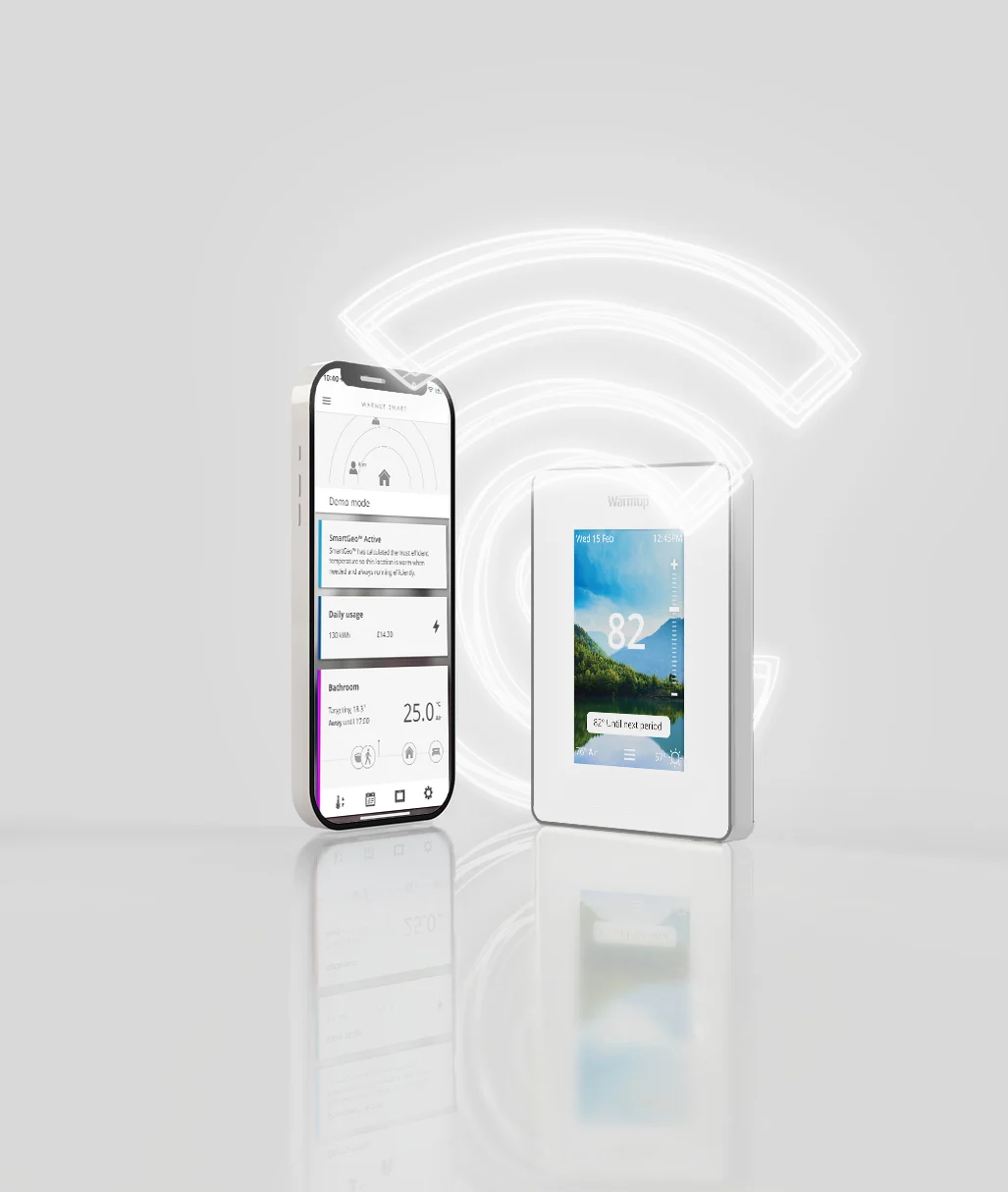
Warmup’s 7iE thermostat offers app-based scheduling, energy-use information, weather-aware control, and smart-home integration. Schluter also offers connected thermostat options with scheduling and energy tracking. Either system can be convenient; Warmup’s monitoring and support services are what make its control package stand out.
Installation quality remains more important than brand loyalty. The heating layout must avoid permanent fixtures, maintain the manufacturer’s spacing, use the correct sensor arrangement, be tested at the required stages, and be coordinated with the tile or flooring assembly. Electrical connections should be completed by a qualified electrician in accordance with local requirements.
Schluter can be the easiest choice for a tile installer already using DITRA, KERDI, and other Schluter components throughout the room. Warmup is especially attractive when the project is being designed as a complete comfort system and the homeowner wants more control over heating performance after the contractor leaves.
OUR VERDICT
The Better Choice for Most Connecticut Homeowners
Schluter DITRA-HEAT is a respected system, and choosing it is not a mistake—particularly when the room is already being built around Schluter’s tile-installation products.
But when we compare the complete homeowner experience, Warmup is the system we would recommend first for most Connecticut projects. It offers strong floor-heating performance, a defined path to primary heating when heat-loss calculations support it, a purpose-built insulation option, sophisticated controls, free remote diagnostics, optional efficiency monitoring, and a North American team based here in Connecticut.
That does not make Warmup automatically right for every room. It does make it the more compelling starting point for a homeowner choosing from scratch.
Want a Warmup system sized for your project?
Use Warmup’s project quote tool to begin evaluating the room, flooring, controls, and heating goals.
FREQUENTLY ASKED QUESTIONS
Warmup vs. Schluter FAQs
Can Warmup heat an entire room?
Yes, in suitable homes and rooms. Warmup requires a heat-loss calculation to determine whether the available floor area and designed wattage can satisfy the heating demand. Efficient new construction and well-insulated renovations are usually better candidates than older, draftier homes.
Does that mean Schluter cannot provide primary heat?
Not necessarily. Electric floor-heating performance depends on output and room conditions. The distinction is that Schluter publicly positions DITRA-HEAT mainly for floor warming and comfort, while Warmup explicitly supports primary-heating design when the calculations work.
Is Warmup Ultralight the same as DITRA-HEAT-DUO?
No. Both address heat loss into the subfloor and offer acoustic benefits, but their construction and role in the floor assembly differ. Ultralight is a separate four-in-one insulation board designed to work with Warmup heating products; DITRA-HEAT-DUO integrates its thermal break and sound-control layer into Schluter’s uncoupling membrane.
Is Efficiency+ required?
No. Efficiency+ is an optional paid subscription. Warmup’s Smartcare React remote diagnostics are available separately at no charge with a compatible connected system.
Which system is better for a Connecticut bathroom remodel?
Both can warm tile effectively when designed and installed correctly. We favor Warmup when the homeowner values local presence, primary-heating design support, remote diagnostics, energy guidance, and a connected control experience. Schluter remains attractive when the contractor is already using the full Schluter assembly.
Planning a bathroom, addition, or whole-home renovation in Connecticut?
Fine Home Contracting can help evaluate radiant floor heating as part of the complete design and construction plan.
About the Author: David Perrotti