6 MIN READ
The Work Before the Work: Preparing an Occupied Home for Kitchen Demolition
September 11, 2026

Kitchen demolition gets treated like the first dramatic moment of a remodel. In an occupied home, however, the most important work often happens before a cabinet comes off the wall.
On a recent Connecticut kitchen project, our team spent the days before demolition coordinating deliveries, protecting a new driveway, establishing storage, and planning how dust and debris would move through the property. Those details were not side notes. They were what allowed demolition to begin without turning the rest of the home into the jobsite.
This is what professional preparation looks like in the field—and why it matters to homeowners who plan to live in their home during construction.
THE REAL FIRST DAY
Demolition Begins With Logistics
Before demo day, the dumpster, portable restroom, cabinets, and tile all needed a place in the sequence. The dumpster arrived first. Cabinets were received and stored safely in the garage. The portable restroom followed, and tile delivery was coordinated around the start of demolition.
The order matters. A poorly placed dumpster can block material deliveries. Cabinets delivered into an unprepared space can be damaged or moved repeatedly. A trade arriving before access is ready loses time. Good mobilization means deciding where people, debris, tools, and new materials will go before they compete for the same space.
PROTECTING THE PROPERTY
A New Driveway Changed the Setup Plan
This home had a new driveway, so heavy delivery traffic and repeated trips to the dumpster required more than a reminder to be careful. Four sheets of plywood were placed before the dumpster arrived. Two more were staged for demolition day to protect the path crews would use across the driveway.
That is a small example of a larger principle: protection should match the actual property. A paved drive, finished stair railing, hardwood hallway, narrow entry, landscaping, or recently painted room each changes how the site should be set up.
The work zone is not only the room being remodeled. It includes every surface and pathway the project will touch.
INSIDE THE HOME
Creating a Protected Route to the Kitchen
The team planned floor and wall protection before demolition began. The goal was not just to cover the kitchen floor. It was to establish a durable route for workers and debris, protect nearby finishes, and separate the construction zone from the occupied part of the home.
Floor protection also has to evolve with the job. It must stay secure under foot traffic, allow doors to operate, and be checked as demolition exposes new working areas. Wall corners, door jambs, stairs, and railings can be just as vulnerable as floors.
A clear route also makes cleanup more effective. Debris has one controlled path out, new materials have one planned path in, and the rest of the house sees less unnecessary traffic.
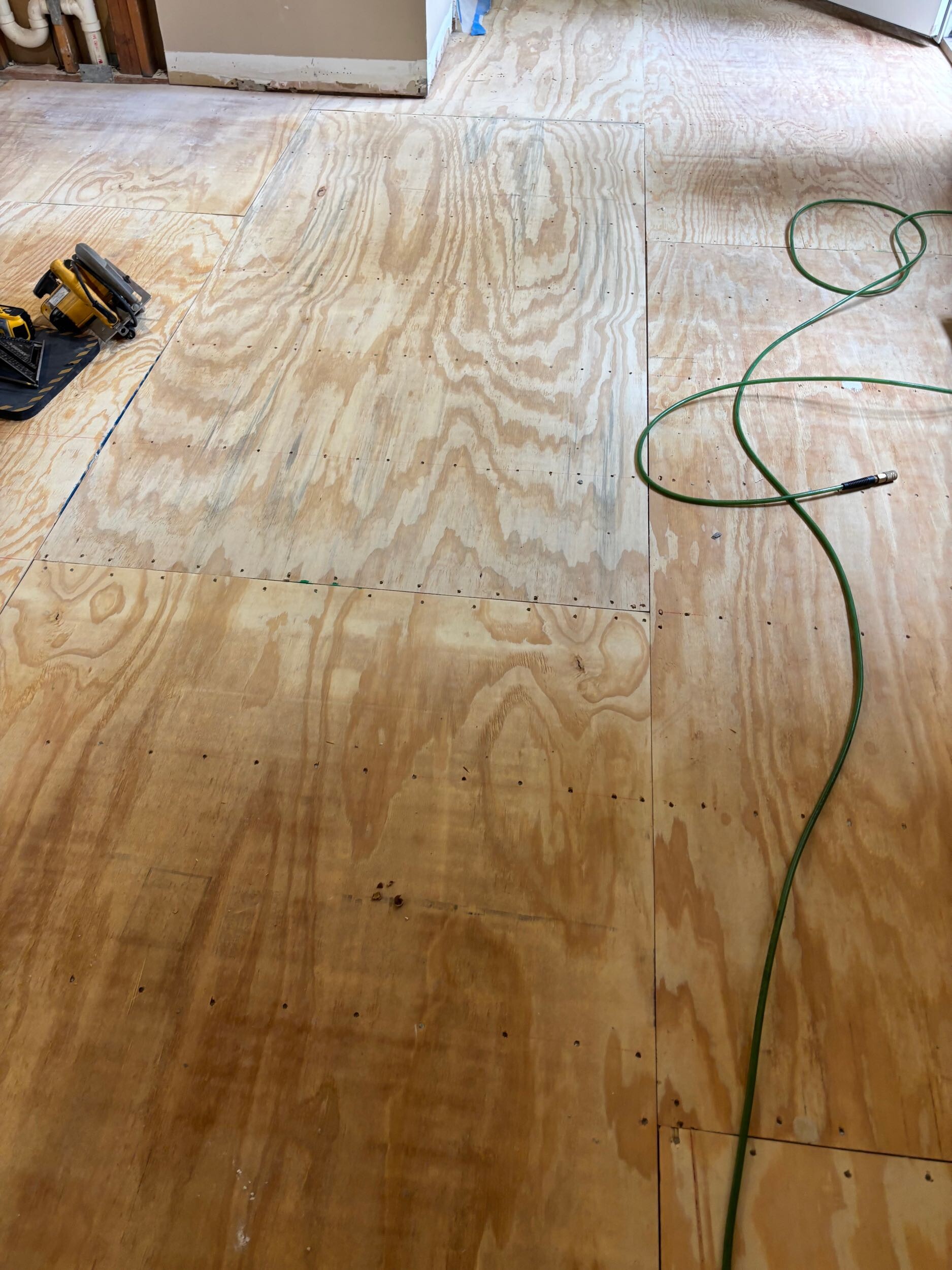
Once demolition was complete, the protected work zone allowed the team to move directly into subfloor repairs and rough-trade coordination.
DUST CONTROL
Plastic Is Only Useful When the System Is Complete
After the first day, the plan called for additional floor protection and fully sealed plastic seams before the messier work continued. The air conditioning would be shut off and the vents covered before drywall and tile removal.
Those steps work together. Plastic hung loosely in a doorway is not the same as containment. Gaps at the edges become dust paths. An operating HVAC system can carry fine debris beyond the room. Doors that are opened repeatedly undermine the barrier.
Dust cannot be eliminated entirely during demolition, but it can be managed with a defined work zone, sealed barriers, protected vents, controlled traffic, and daily cleanup. Homeowners should expect a contractor to explain that plan before the loud work begins.
MATERIAL STORAGE
The Garage Became Part of the Schedule
Cabinets arrived before demolition and were protected in the garage. Later deliveries were also staged there until the installation sequence was ready for them.
Storage is not simply finding empty square footage. Materials need to stay dry, remain accessible for inspection, and avoid blocking tools or future deliveries. The team also needs to know which boxes will be needed first so an installer is not unpacking an entire garage to locate one component.
WHAT HOMEOWNERS SHOULD EXPECT
Questions Worth Asking Before Demo Day
- Where will the dumpster and portable restroom go? Their placement affects deliveries, parking, neighbors, and access.
- What route will crews use? Ask which floors, walls, stairs, and doorways will be protected.
- How will dust be contained? The answer should include barriers, seams, HVAC vents, traffic control, and cleanup.
- Where will materials be stored? Confirm that cabinets, tile, fixtures, and appliances will be dry, secure, and reachable.
- What should the homeowner move? Personal items, fragile objects, and anything needed during construction should be handled before mobilization.
WHY THIS MATTERS
Preparation Protects More Than Finishes
Property protection prevents damage, but good preparation also protects the schedule and the relationship with the homeowner. Deliveries arrive to a place prepared for them. Trades know how to enter and where to work. Dust-control expectations are clear. The home feels managed instead of overtaken.
The visible transformation may begin with demolition. The quality of the experience begins with the planning that happened before it.
PLANNING A KITCHEN REMODEL?
Ask About the Work Before the Work
Fine Home Contracting coordinates design, site protection, deliveries, trades, and construction so Connecticut homeowners understand how the project will operate before demolition begins.
FREQUENTLY ASKED QUESTIONS
Kitchen Demolition Preparation FAQ
Can you live in a house during kitchen demolition?
Often, yes. The practical answer depends on the scope, access, utilities, dust-control plan, and whether the household has a workable temporary kitchen.
How should floors be protected during demolition?
Protection should cover the full traffic route, stay secured under repeated use, and be checked as the work zone changes. Door jambs, corners, stairs, and railings may need protection too.
Should the HVAC run during dusty demolition?
The project team should decide this based on the work and conditions. During especially dusty phases, shutting the system down and covering vents can help keep debris from circulating through the home.
When should cabinets and tile be delivered?
Delivery timing should match available protected storage and the installation sequence. Materials that arrive early need a dry, secure location where they will not block access or be moved repeatedly.
About the Author: David Perrotti