7 min read
Roof Integration on Home Additions in Newtown, CT: Why It Matters More Than Most Homeowners Realize
June 22, 2026
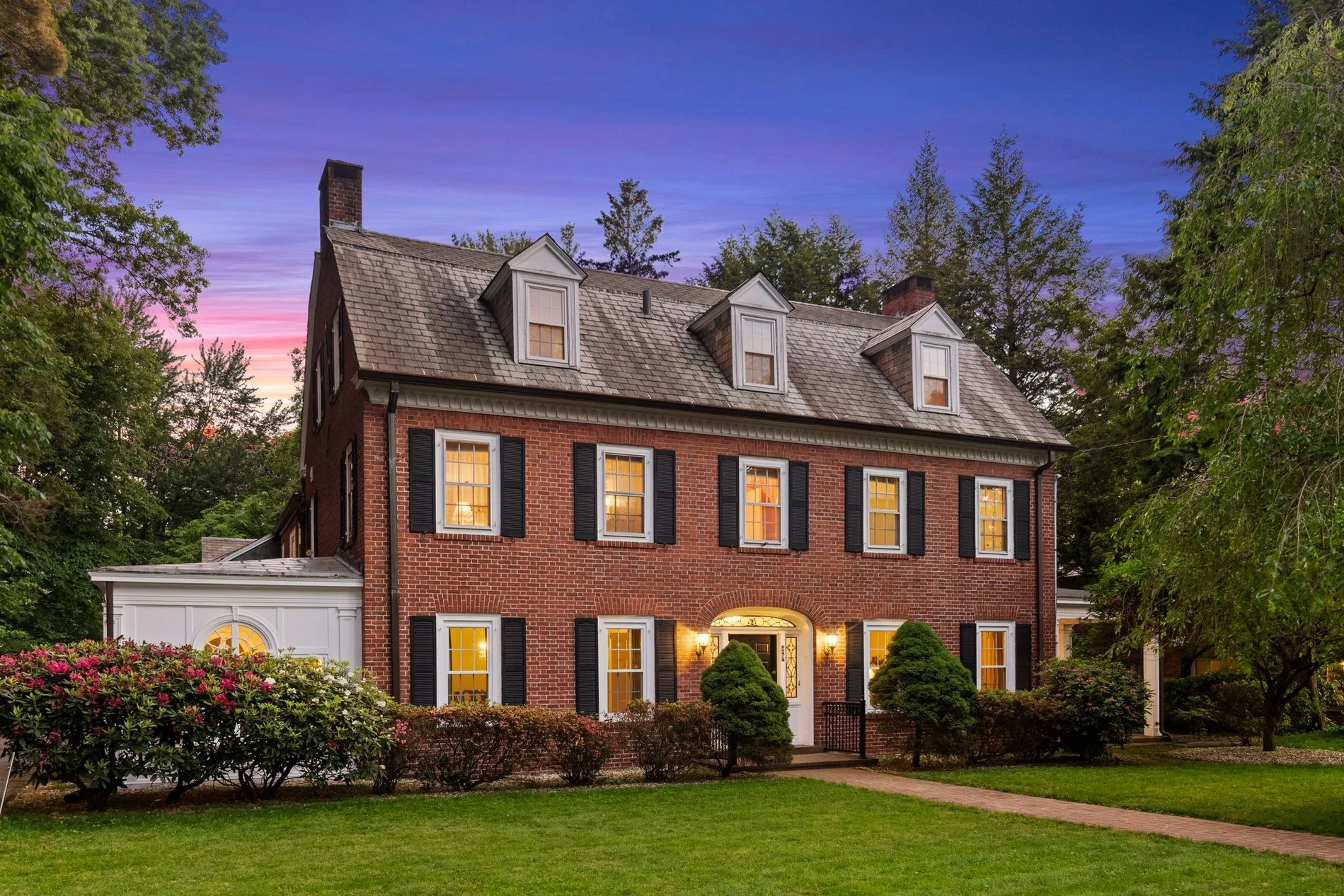
When homeowners begin planning a home addition, they often focus on the new space itself.
They imagine a larger kitchen, a spacious family room, a first-floor primary suite, a home office, or an in-law suite that better supports their family’s needs.
What many homeowners do not initially think about is one of the most important architectural and structural components of the entire project:
How the roof of the addition will connect to the existing home.
In reality, roof integration often determines whether an addition looks like it was always part of the house or whether it feels like something that was added years later.
For homeowners in Newtown, where homes range from historic Colonials and farmhouses to custom-built residences on larger properties, thoughtful roof integration plays a critical role in preserving architectural character, curb appeal, and long-term value.
A successful addition should feel seamless.
That process often begins with the roof.
EDUCATION
What Is Roof Integration?
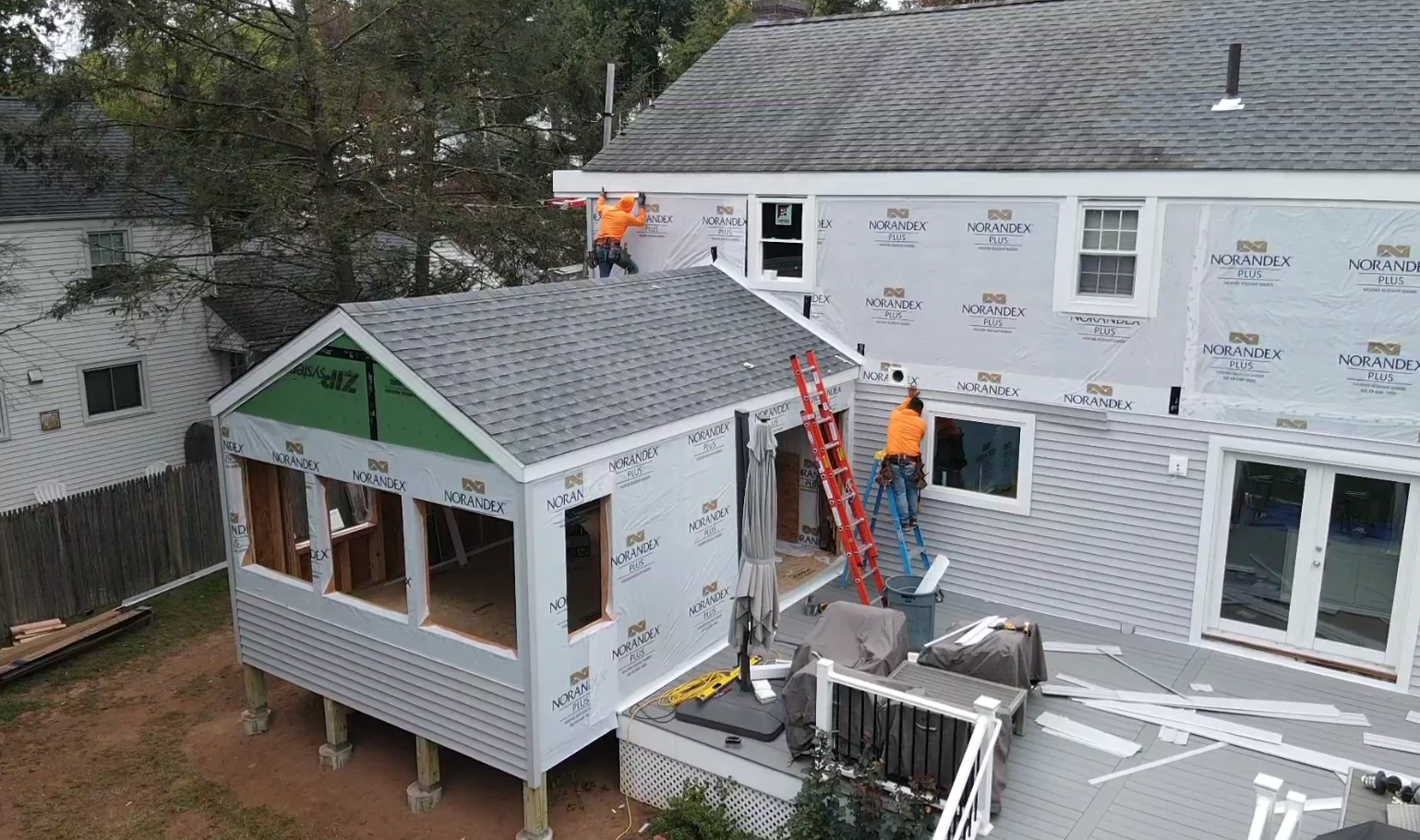
Roof integration refers to the way the roof of a new addition connects to the roof structure of the existing home.
The goal is to create a transition that feels natural both visually and structurally.
A properly integrated roof should:
- Look original to the home
- Maintain architectural balance
- Direct water properly
- Support structural performance
- Blend naturally with existing rooflines
- Protect long-term durability
When roof integration is done well, most people should not be able to tell where the original house ends and the addition begins.
THE NEED
Why Roof Integration Is So Important
Many homeowners naturally focus on floor plans, cabinetry, finishes, and room layouts.
While those decisions are important, the roof often has the greatest impact on how the finished addition looks from the outside.
Poor roof integration can create:
- Awkward rooflines
- Unbalanced proportions
- Drainage problems
- Water management issues
- Structural challenges
- Reduced curb appeal
Even a beautiful interior can feel compromised if the addition appears disconnected from the home’s original architecture.
FOUNDATION
The Best Additions Look Original
One of the clearest signs of a successful home addition is that it feels like it was always part of the home.
This is especially important in Newtown, where many properties feature traditional New England architecture, historic influences, and carefully established neighborhood character.
The roofline plays a major role in achieving that level of integration.
A thoughtfully designed addition should improve the home while preserving the qualities that made it attractive in the first place.
CHALLENGES
Common Roof Integration Challenges
Every property presents unique opportunities and constraints.
However, several roof-related challenges appear frequently during addition planning.
Existing Roof Height
The height and pitch of the existing roof often influence what is possible.
If the new roof sits too high or too low relative to the original structure, the addition may feel disconnected from the rest of the home.
Careful planning helps create visual balance.
Multiple Roof Planes
Many Newtown homes already include:
- Gables
- Dormers
- Valleys
- Intersecting rooflines
Adding another roof section requires thoughtful design to avoid unnecessary complexity and maintain architectural consistency.
Window Placement
Second-floor windows often influence how a new roof can connect to the existing structure.
Poor planning can block natural light, create awkward exterior elevations, or compromise the overall appearance of the home.
Water Management
Roof integration is not only about appearance.
The roof must also perform properly.
Poorly designed roof transitions can lead to:
- Ice dams
- Water concentration points
- Drainage issues
- Increased maintenance requirements
A properly integrated roof protects both the addition and the original structure.
TYPES OF ADDITIONS
Roof Integration and Different Types of Additions
Different additions create different roof design opportunities.
Kitchen Additions
Kitchen additions often require modifications to existing roof structures in order to create larger, open-concept spaces.
The roof design must support both the structural changes and the home’s overall architectural appearance.
Family Room Additions
Family room additions frequently provide opportunities to extend existing rooflines and create a seamless continuation of the original structure.
First-Floor Primary Suite Additions
Primary suite additions require careful balancing of interior ceiling heights and exterior roof proportions.
The addition should feel substantial without overwhelming the original home.
Garage Additions
Garage additions often have a significant impact on curb appeal because they are highly visible from the street.
Roof integration becomes especially important in maintaining the overall appearance of the property.
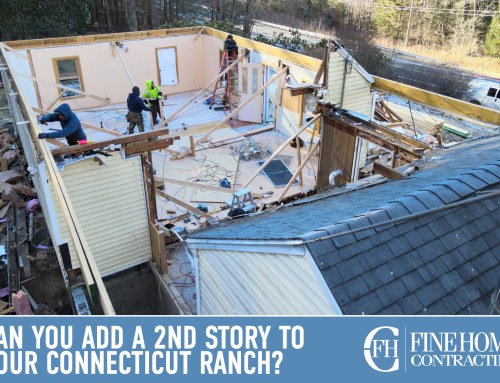
Second-Story Additions
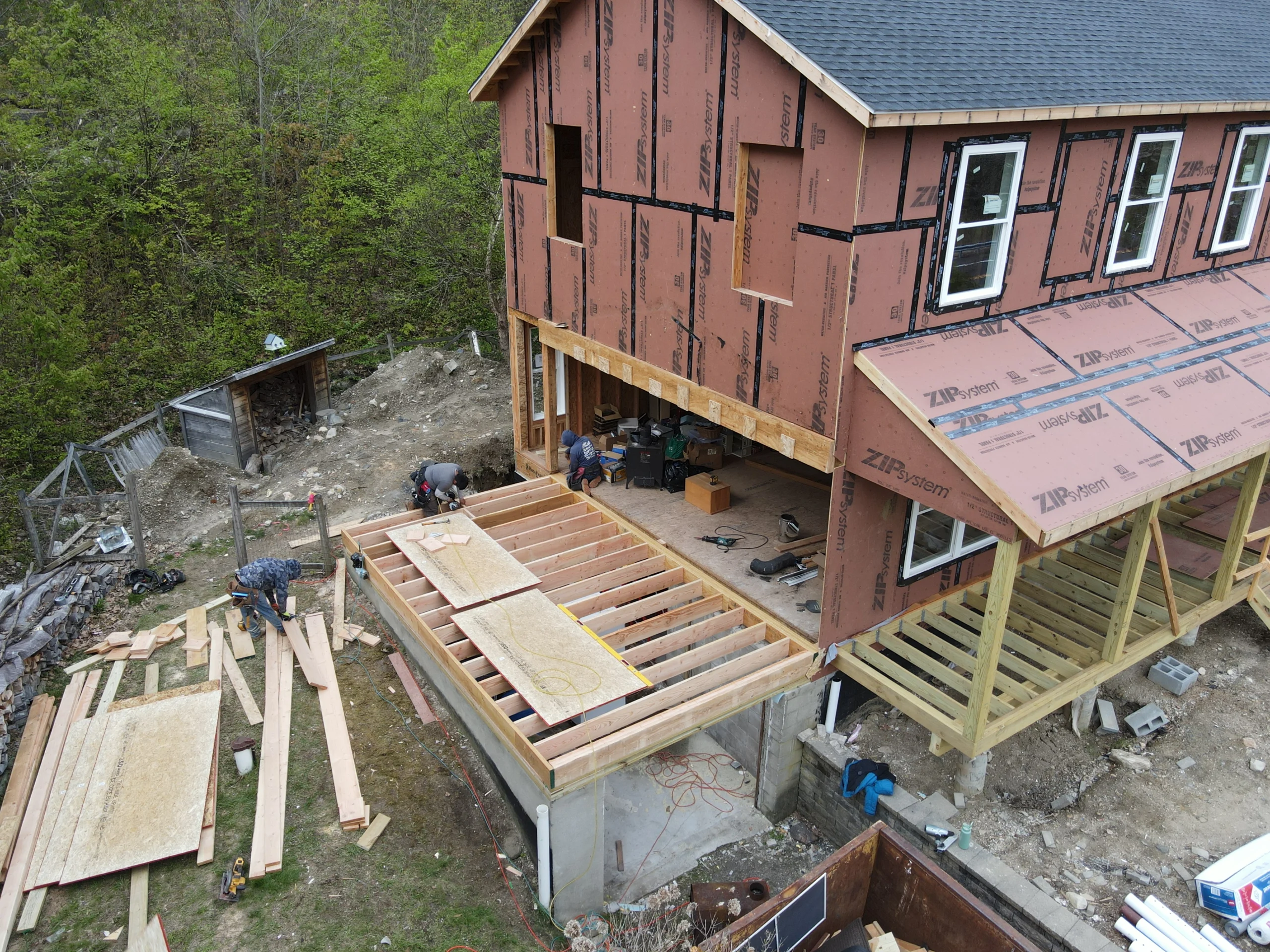
Second-story additions are among the most complex roof integration projects.
These additions often involve:
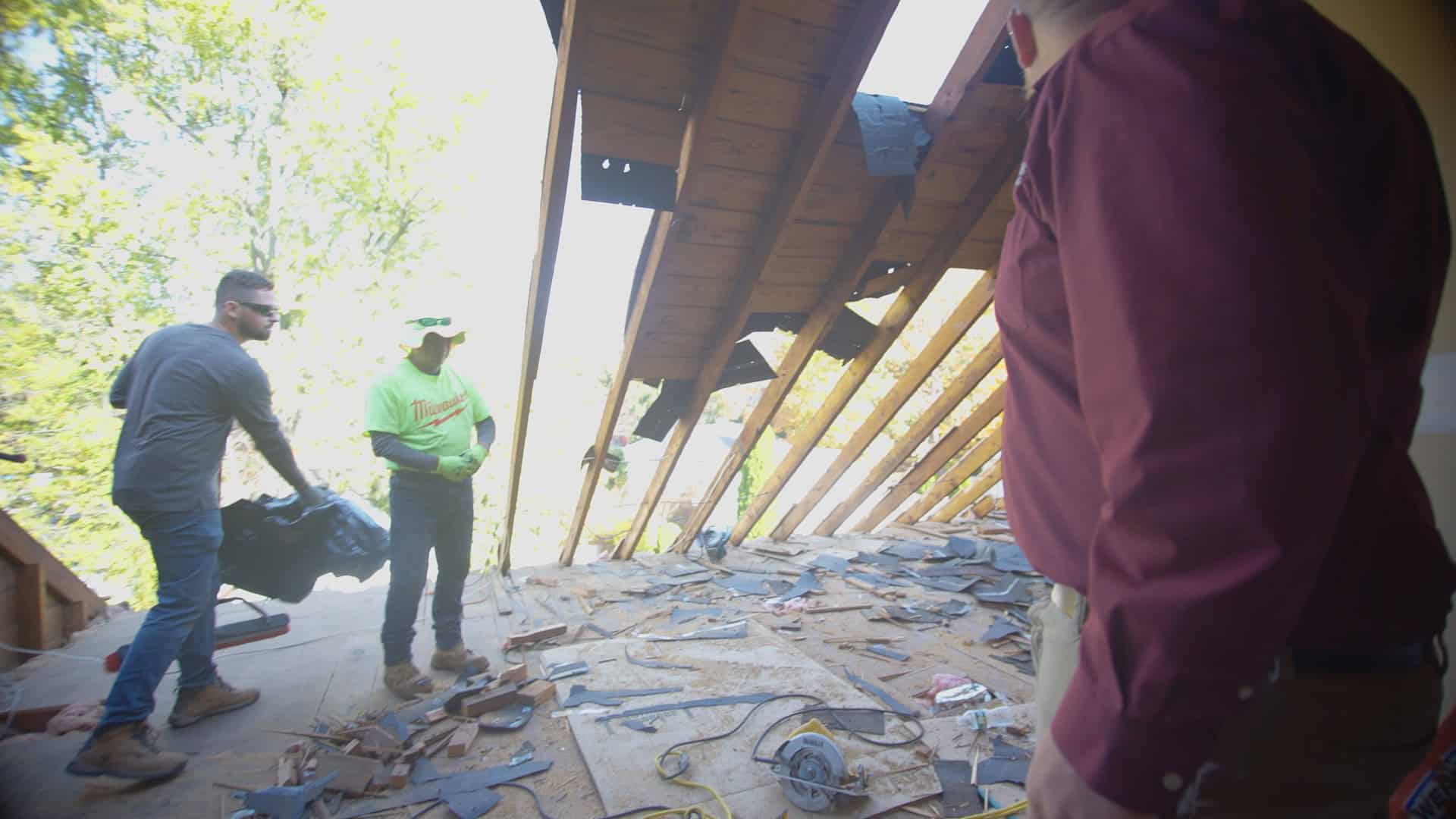
- Roof removal
- Structural reinforcement
- New dormers
- Framing modifications
- Complete roof redesigns
Because the roof becomes such a dominant architectural feature, planning is critical.
OUR PROCESS
A MORE COMPLETE WAY TO REMODEL
Large-scale home transformations require more than quality construction alone. They call for a team that can bring design, budgeting, selections, scheduling, and execution together from the very beginning.
At Fine Home Contracting, we guide Connecticut homeowners through complex remodels and additions with one coordinated team and one clear, carefully managed process. The result is a smoother experience, stronger alignment throughout, and a finished home that feels beautifully considered at every stage.
Whether you are opening an older layout, creating more space for the way your family lives today, or reimagining an entire home with greater comfort, function, and refinement, our focus remains the same: thoughtful planning, exceptional craftsmanship, and a result that feels cohesive in every detail.
EDUCATION
What Makes Roof Integration Unique in Newtown?
Newtown offers a diverse mix of architectural styles and property types.
Many homeowners choose to remodel because they value:
- Larger properties
- Historic character
- Rural charm
- Established neighborhoods
- Long-term property ownership
As a result, additions often need to accomplish more than simply add space.
They need to preserve the character and value of the home.
Historic and Traditional Architecture Deserves Careful Consideration
Throughout Newtown, it is common to find:
- Historic Colonials
- Farmhouses
- Cape-style homes
- Traditional New England architecture
- Custom-built residences
These homes often have architectural details that deserve thoughtful integration during addition planning.
A poorly designed roof can quickly disrupt the balance of the original structure.
Larger Properties Still Require Thoughtful Design
Many Newtown homeowners enjoy larger lots than those found in neighboring suburban communities.
However, larger lots do not automatically solve design challenges.
An addition should still be carefully proportioned to the home itself rather than simply maximizing square footage.
Site Conditions Can Influence Roof Design
Many Newtown properties include:
- Sloping terrain
- Wooded settings
- Septic systems
- Wetlands considerations
- Drainage challenges
These factors can influence how an addition is positioned and how the roof system is designed.
DESIGN-BUILD
Why Design-Build Works Well for Roof Integration
One of the greatest advantages of a design-build approach is that both design and construction professionals are involved from the beginning.
Roof integration is not simply an architectural exercise.
It requires consideration of:
- Structural framing
- Existing conditions
- Drainage
- Load paths
- Material transitions
- Construction sequencing
- Long-term performance
When designers and builders collaborate throughout planning, potential challenges can often be identified before construction begins.
This creates a smoother process and a better finished result.
MISTAKES
Common Roof Integration Mistakes Homeowners Should Avoid
Prioritizing Square Footage Over Architecture
The goal should not simply be to build the largest addition possible.
The addition should support and enhance the home’s architecture.
Designing the Interior Without Considering the Exterior
Floor plans and rooflines should evolve together.
The best additions work equally well inside and out.
Ignoring Existing Roof Conditions
Older roofing systems, previous renovations, and framing modifications can all affect how a new roof connects to the home.
Focusing Only on Function
A roof must perform well, but it should also contribute to the home’s architectural character.
Waiting Too Long to Discuss Roof Design
Roof integration should be considered from the earliest stages of planning rather than after the floor plan has been finalized.
FAQS
FREQUENTLY ASKED QUESTIONS
Why is roof integration important during a home addition?
Roof integration affects appearance, structural performance, drainage, and how naturally the addition blends with the existing home.
Can poor roof integration affect home value?
Yes. Additions that appear disconnected from the original architecture can negatively impact curb appeal and overall perception of quality.
Does roof integration increase construction costs?
Sometimes. However, thoughtful planning often prevents costly modifications later and improves the overall quality of the project.
Can an addition match my existing roof?
In many cases, yes. The goal is usually to create a seamless transition between the original structure and the addition.
Are second-story additions more complicated?
Yes. Second-story additions often require extensive roof modifications and structural planning.
When should roof integration be discussed?
Ideally, roof design should be evaluated at the beginning of the design process, before floor plans are finalized.
PLANNING MATTERS
The Difference Between Adding Space and Creating a Cohesive Home
Anyone can build an addition.
The real challenge is creating an addition that feels like it was always meant to be there.
For homeowners in Newtown, where architectural character, curb appeal, and long-term value matter, roof integration is one of the most important aspects of a successful remodeling project.
A thoughtfully designed roof does more than protect the home. It creates visual balance, supports long-term performance, and helps the addition blend naturally with the existing architecture.
At Fine Home Contracting, roof integration is considered from the earliest stages of the design-build process. By evaluating structure, aesthetics, functionality, and construction together, we help homeowners create additions that feel cohesive, architecturally consistent, and thoughtfully integrated with the homes they already love.
If you are considering a home addition in Newtown, CT, Fine Home Contracting can help you evaluate how the new space will connect to your existing home so the finished project feels natural, seamless, and built to stand the test of time.
SCHEDULE A CONSULTATION
READY TO TRANSFORM YOUR HOME?
After you submit, our team will reach out within 1 business day to schedule a call and discuss your goals.
SCHEDULE A CONSULTATION
READY TO TRANSFORM YOUR HOME?
After you submit, a member of our team will reach out within 1 business day to discuss your goals.
FINE HOME CONTRACTING
Luxury Design-Build Services
About the Author: David Perrotti