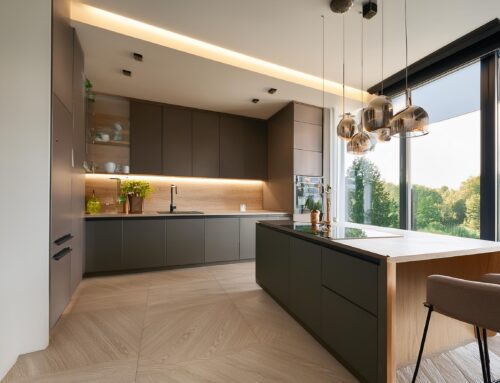
Connecticut kitchen remodeling
How Much Does a Kitchen Remodel Cost in Connecticut?
Updated October 29, 2026
A kitchen budget starts with what you want to change. Replacing finishes in a working layout is a different project from moving walls, rebuilding the room, and connecting it to a redesigned first floor. A statewide average cannot tell you which of those projects it describes.
For a substantial kitchen remodel in Connecticut, compare the full scope before comparing prices. Fine Home Contracting focuses on design-build renovations where layouts, selections, construction, and project management need to work together.
What do real project budgets look like?
Our Connecticut remodeling portfolio provides useful examples of the scale of work we undertake. It lists a Stamford first-floor renovation at $200,000–$275,000 and a Burlington kitchen-and-bathroom transformation at $300,000–$375,000.
Those published investment ranges describe broader projects, not kitchen-only quotes or current statewide averages. They also are not a company minimum. A different house, scope, or finish package needs its own evaluation. Use the examples to understand project scale, then ask what is included in the work you are considering.

First, decide which type of kitchen project you need
A focused finish update
If the layout works and the cabinets are worth keeping, a focused update may address surfaces, hardware, or selected fixtures. It involves less work than rebuilding the room. This type of project is generally better suited to a specialist in that service than to our substantial design-build remodeling approach.
A full kitchen renovation
Replacing cabinets, counters, appliances, lighting, and flooring creates a larger scope even if major work areas stay in place. Demolition, preparation, installation, trade work, and final repairs all need to be accounted for. The cabinet quote alone does not represent the construction budget.
A kitchen and first-floor transformation
Moving walls or opening the kitchen to adjoining rooms can affect structure, heating and cooling, electrical routes, ceiling finishes, and flooring beyond the original room. This is where clear boundaries matter: how much of the surrounding house will be rebuilt or refinished?
The biggest decisions behind the investment
- Layout and structure: wall removal, new openings, beams, and changes to appliance locations.
- Cabinetry: quantity, construction, storage accessories, appliance panels, finished ends, and decorative details.
- Stone and tile: material, slab yield, fabrication, seams, backsplash, and installation conditions.
- Appliances and utilities: equipment specifications and the power, ventilation, plumbing, and clearances they require.
- Finish boundaries: flooring transitions, ceiling repairs, trim, paint, and adjacent rooms.
- Planning and management: design development, selections, permits, scheduling, protection, and trade coordination.
Square footage influences quantities, but two kitchens of the same size can have very different construction needs. Price per square foot is useful only when the assumptions and inclusions are clear.
Read allowances and exclusions before the total
An allowance assigns an amount to something not fully selected or priced. Ask what each allowance includes: material only, or delivery, tax, fabrication, and installation as well? Ask how quantities were established and how actual selections will be reconciled.
Identify anything you are expected to buy separately, including appliances, fixtures, or lighting. Also establish how additions, deletions, credits, and discovered conditions will be documented and approved. These details make an early number easier to understand.
Include the surrounding home and your living arrangements
Consider how the household will cook, access the work area, and use adjoining rooms during construction. Temporary accommodation, storage, and meals may sit outside the construction contract but still affect the overall investment.
Review the existing house before committing to a layout. Electrical capacity, ventilation routes, concealed conditions, and the condition of the floor may affect the plan. Permit and inspection requirements should be confirmed for the actual work with the appropriate town departments.
Treat resale estimates as a separate question
A remodel can improve how your home works without returning every dollar at resale. Published resale studies describe defined project types and markets; they do not predict the selling price of your house. Avoid using an old ROI percentage as a guarantee or treating it as a substitute for a project budget.
How to begin planning with Fine Home Contracting
Bring photos, the problems you want to solve, the spaces involved, and your investment expectations to the first conversation. Our design-build process develops the layout, selections, and construction plan so pricing can be tied to more specific information.
Explore our kitchen and bathroom remodeling services, see whether your project fits our approach, or read the Glastonbury kitchen cost guide for a local planning discussion.
Kitchen remodeling budget questions
Can an early estimate change during design?
Yes. Layout changes, selections, site information, and scope development can change the estimated investment. Ask what the estimate is based on and what must be resolved before the construction agreement.
Are appliances included?
That depends on the proposal. Establish who purchases each appliance and who handles delivery, installation, and any required utility changes.
How do I compare two kitchen proposals?
Compare the same rooms, drawings, finish specifications, allowances, and responsibilities. Resolve exclusions and scope differences before deciding what the difference in price means.
About the Author: David Perrotti